
What Does Pet Insurance Cover? Complete Guide for 2026
Pet insurance in 2026 has become a mainstream tool used by millions of pet owners to manage rising and unpredictable veterinary costs.
It typically covers accidents and illnesses, reimbursing a large share of vet bills after deductibles, while excluding pre-existing conditions and most routine care unless added as a wellness plan.
Key Highlights
- 5.6M+ pets insured in North America expected to pass 6M in 2026
- Emergency care costs 1,500–7,000+
- Lifetime treatment can reach 15,000–30,000
- Most plans reimburse 70–90 percent after the deductible
- Waiting periods and policy limits affect coverage and payouts
Choosing early is important because conditions that appear before or during waiting periods are often not covered.
OVERVIEW
Accident and illness coverage is the foundation of most pet insurance plans.
Coverage Tier
It covers emergency vet visits, surgeries, hospitalization, cancer treatment, infections like urinary tract infections (UTIs), prescription medication coverage, and diagnostic services including MRI, X-rays, and ultrasounds. This is the coverage tier that most pet owners are actually buying when they sign up.
Providers like ASPCA Pet Health Insurance offer their Complete Coverage SM plan as an example of comprehensive accident-and-illness protection.
➤ It includes veterinary exam fees, medications, and diagnostic services.
Pet insurance for dogs and pet insurance for cats share the same core coverage structure, though premiums and breed-specific risks differ significantly.
Surgery coverage is a primary reason owners purchase pet insurance. A single foreign body ingestion surgery can cost $3,000 to $8,000.
Tumor removal and emergency operations fall in the same range. Without coverage, those bills land entirely on you.
What Accident Coverage Includes
Broken bones, lacerations, poisoning, foreign body ingestion, bite wounds, and emergency vet visits are all standard under accident coverage.
If your dog swallows a sock or your cat gets into a scuffle, this is the coverage that kicks in.
An Accident-Only plan is the most affordable tier at $10 to $20 per month in 2026. It does not cover illnesses.
This plan works best for budget-conscious owners who want catastrophic injury protection only and are willing to self-insure against diseases.
What Illness Coverage Includes
Cancer treatment, infections, pancreatitis, diabetes, allergies, digestive disorders, and chronic conditions are all covered under accident-and-illness plans.
These are the conditions that generate the largest vet bills over a pet’s lifetime.
Diagnostic services like MRI, X-rays, ultrasounds, and blood work are included when medically necessary for diagnosing a covered illness.
Prescription medication coverage for ongoing conditions is typically included in these plans as well, whether your pet needs a short course of antibiotics or long-term insulin.
Hereditary, Congenital, and Chronic Conditions
Many comprehensive plans cover hereditary and congenital conditions as long as they are not pre-existing.
This is one of the most important differentiators when comparing plans. A cheap policy that excludes hereditary conditions coverage can leave you exposed to the exact bills you’re trying to avoid.
➤ Hip dysplasia, common in German Shepherds and Labrador Retrievers, is typically covered but subject to a 6 to 12 month orthopedic waiting period.
➤ Intervertebral disk disease (IVDD), frequently seen in Dachshunds and French Bulldogs, can require surgery costing $3,000 to $8,000.
Comprehensive plans generally cover IVDD treatment if it’s not pre-existing.
Chronic conditions like allergies, diabetes, and heart disease are covered on an ongoing basis under most accident-and-illness plans.
Coverage renews annually as long as the policy remains active. Your insurer won’t drop a condition just because your pet was diagnosed with it after enrollment.
Breed-Specific Risks
Your pet’s breed directly impacts which plan tier you should choose. High-risk breeds face higher premiums, but they also stand to benefit the most from comprehensive coverage.
| Breed | Common Hereditary Conditions |
|---|---|
| Bulldogs (English/French) | IVDD, hip dysplasia, brachycephalic syndrome |
| Maine Coons | Hypertrophic cardiomyopathy |
| Golden Retrievers | Cancer, hip dysplasia |
| Dachshunds | IVDD, patellar luxation |
| German Shepherds | Hip dysplasia, degenerative myelopathy |
Mixed breeds tend to have lower premiums than purebreds due to reduced hereditary condition risk.
That said, mixed breeds aren’t immune to these conditions; they just develop them at lower rates statistically.
What Pet Insurance Does NOT Cover
Understanding what pet insurance does not cover is just as important as knowing what it does. Every plan has exclusions, and they’re often where frustration hits hardest during a claim.
Key exclusions across nearly all plans include:
- Pre-existing conditions
- Cosmetic procedures like ear cropping and tail docking
- Breeding and pregnancy costs
- Grooming
- Elective and non-medically-necessary procedures
- Experimental treatments not endorsed by a licensed veterinarian
- Prescription food and dietary supplements (unless specifically covered)
- Boarding, pet-sitting, and microchip implantation
Waiting Periods
Every pet insurance policy includes waiting periods before coverage becomes active. Conditions diagnosed during the waiting period are classified as pre-existing and excluded from future coverage.
| Condition Type | Typical Waiting Period |
|---|---|
| Accidents | 1 to 14 days |
| Illnesses | 14 to 30 days |
| Orthopedic conditions (hip dysplasia, cruciate ligament) | 6 to 12 months |
Some insurers offer shorter waiting periods than others.
Comparison shopping specifically on this factor can make a real difference, especially if you’re enrolling an older pet or a breed prone to orthopedic issues.
Preventive Care, Dental, Behavioral, and Alternative Therapies
Standard accident-and-illness plans do not cover vaccinations, spaying or neutering, flea and tick prevention, heartworm prevention, or annual wellness exams.
This catches many new policyholders off guard. If you want routine care covered, you need to pay extra for it.
Dental coverage is a gray area. Dental disease, including periodontal disease and tooth extractions caused by disease, is often covered under illness plans.
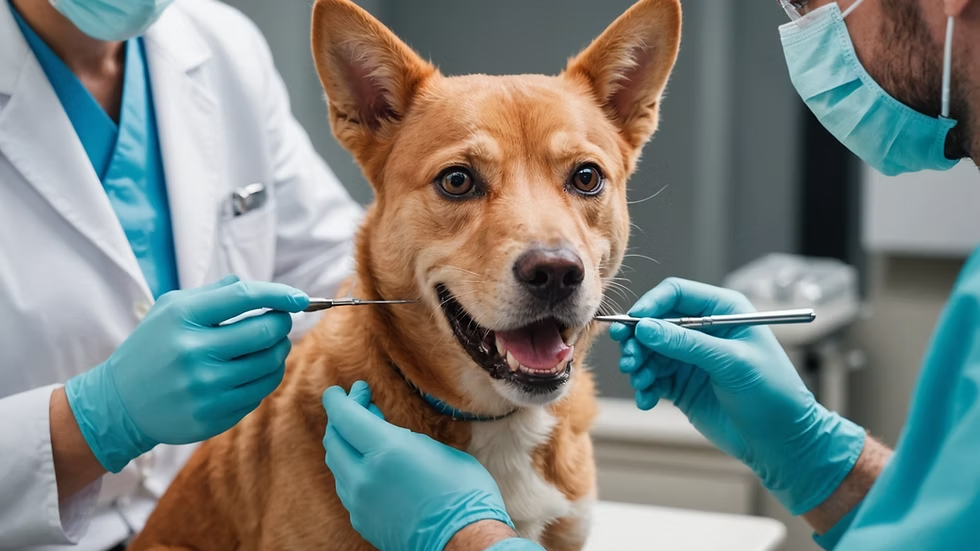
Routine dental cleanings, however, require a wellness add-on.
Alternative Therapies
Alternative therapies for pets, including acupuncture, hydrotherapy, chiropractic care, stem cell treatments, and rehabilitative therapy, are also gaining coverage across more insurers.
Pet Insurance Cost Factors
Urban cities like New York, San Francisco, and Los Angeles often have premiums 30% to 50% higher due to expensive vet care.
Premiums also rise with age, and many insurers accept pets from 6 to 8 weeks old, with upper enrollment limits around 14 years.
A 2-year-old Labrador in a mid-size city may cost about 45 dollars per month for accident and illness coverage. At 10 years old, the same dog can cost 90 dollars or more.
Typical deductibles range from 100 to 500 dollars, with some plans offering as low as 0 or as high as 1,000 dollars.
Most plans reimburse 70%, 80%, or 90% of eligible vet expenses after the deductible is met.
Annual limits usually range from 5,000 dollars to unlimited coverage, depending on the provider and plan.
How Pet Insurance Reimbursement Works
Pet insurance uses a reimbursement model.
You pay the vet bill first, submit a claim, and the insurer reimburses you. Most plans use an annual deductible rather than a per-incident deductible.
Here’s a worked example: Your dog needs a $5,000 surgery. You have a $250 annual deductible and 80% reimbursement.
AI-powered claims processing is enabling reimbursement in under 24 hours with some insurers. Direct vet pay models, where the insurer pays the clinic directly , are also emerging but still rare.
COMPARISON
Choosing the right plan tier depends on your pet’s breed risk and your budget. Here’s how they compare:
| Feature | Accident-Only | Accident & Illness | Comprehensive/Wellness |
|---|---|---|---|
| Broken bones, lacerations | ✔ | ✔ | ✔ |
| Cancer, infections, UTIs | ✖ | ✔ | ✔ |
| Hereditary/congenital conditions | ✖ | ✔ (most plans) | ✔ |
| Vaccines, wellness exams | ✖ | ✖ | ✔ (add-on) |
| Dental cleanings | ✖ | ✖ | ✔ (add-on) |
| 2026 monthly cost range | $10–$20 | $25–$70 | $40–$100+ |
For most pet owners, accident and illness coverage hits the sweet spot between affordability and meaningful protection.
How to File a Claim
Filing a claim is straightforward. Most pet insurance is not network-restricted, meaning you can visit any licensed veterinarian.
- Visit any licensed veterinarian for treatment.
- Pay the vet bill at the time of service.
- Submit your claim via the insurer’s app, website, or mail. Attach the itemized invoice and relevant medical records.
- The insurer reviews the claim, typically within 5 to 15 business days.
- Approved reimbursement is deposited via direct deposit or mailed as a check.
Keep all medical records organized from day one. Use your insurer’s mobile app for faster claims submission.
State-Specific Regulations
California has among the strictest pet insurance transparency laws in the U.S.
Under SB 1511, insurers must provide a 30-day free-look period, disclose all exclusions before purchase, and clearly define how pre-existing conditions are determined.
If you’re in California, you have more consumer protections than pet owners in most other states.
Other states, including Maine and Oregon, are adopting provisions from the NAIC model pet insurance act.
Coverage itself doesn’t change state to state, but premiums vary due to regional veterinary cost differences, and transparency requirements protect consumers differently depending on where you live.
Pet Insurance for Exotic Pets
Most pet insurers only cover dogs and cats. If you own a bird, reptile, rabbit, ferret, or guinea pig, your options are limited.
Nationwide is one of the few providers offering an Avian & Exotic Pet Plan that covers birds, reptiles, and small mammals.
Coverage for exotics is typically more limited than dog and cat plans, and premiums can be higher relative to the animal’s value.
Exotic pet owners should look for plans that cover species-specific conditions and make sure they have access to a veterinarian experienced in exotic animal medicine.
Is Pet Insurance Worth It
Average lifetime vet costs for a dog are about 15,000 to 30,000 dollars over 10 to 15 years.
Lifetime insurance premiums for accident and illness coverage are usually around 5,000 to 12,000 dollars for the same period.
Insurance often makes sense because major illness or surgery can happen unexpectedly and cost thousands.
It also helps remove cost-based decisions around treatment, giving more flexibility in emergencies.
Best move is to enroll early while your pet is young and healthy, compare at least three providers, and focus on accident and illness coverage with suitable deductible and reimbursement levels.