Does Pet Insurance Cover Medication in 2026?
Veterinary medication prices increased sharply in 2026, leaving many pet owners paying hundreds of dollars monthly for insulin, arthritis drugs, and cancer treatments.
Accident and illness policies commonly cover 70%–90% of eligible prescription costs after deductibles, while pre-existing condition medications are usually excluded.
Key Highlights
- Prescription costs rose significantly in 2026
- Most insurers reimburse after upfront payment
- 70%–90% coverage is common after deductible
- Pre-existing condition drugs are excluded
- Preventive medications need wellness coverage
Pet Insurance Medications in 2026?
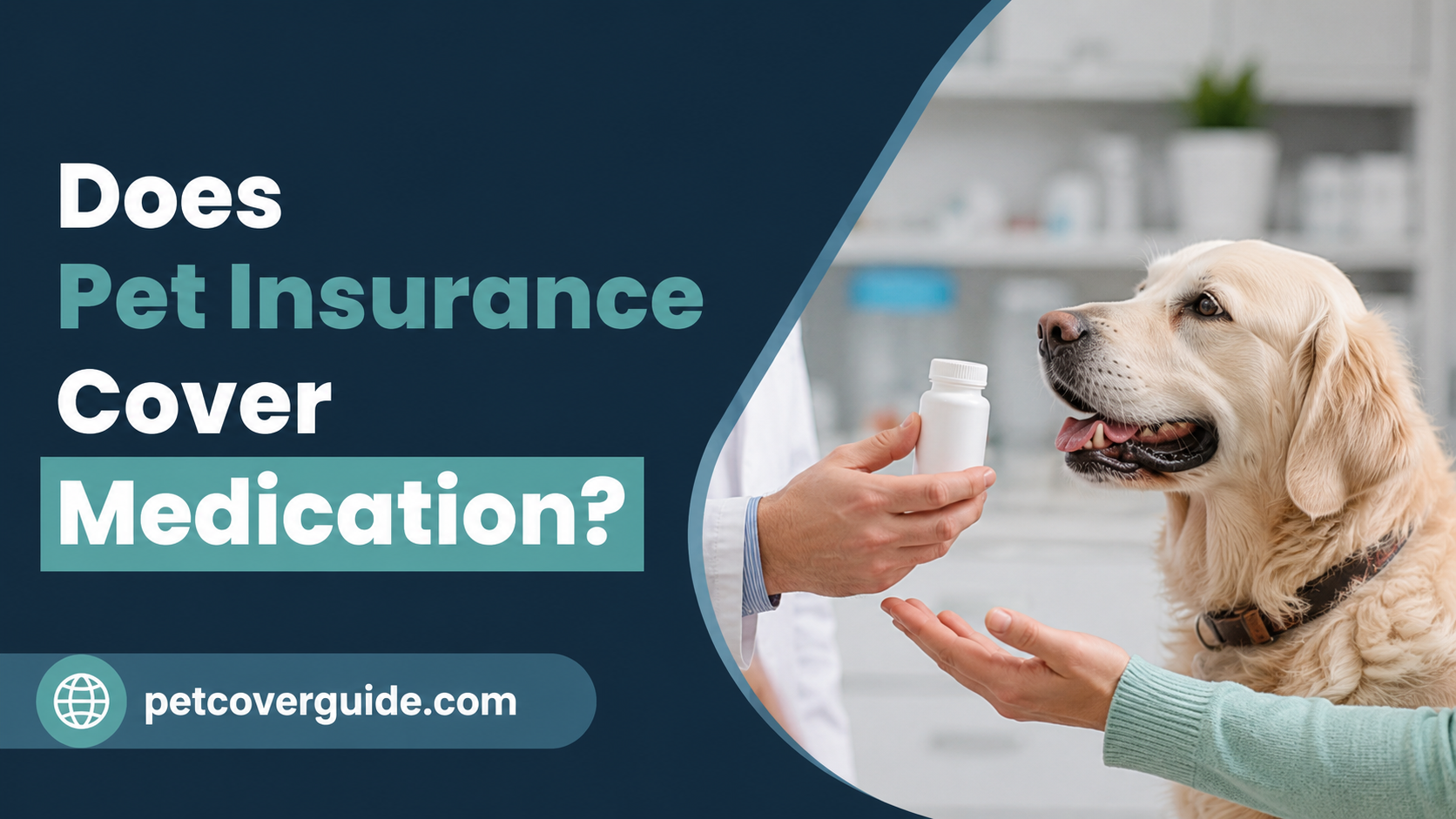
Most accident-and-illness pet insurance policies reimburse you for prescribed medications tied to covered conditions.
You pay upfront, then submit receipts for 70 to 90 percent back depending on your chosen reimbursement rate.
★ Covered medications include antibiotics for infections, carprofen for post-surgical pain from an accident, insulin for diabetes, and many oncology drugs.
Coverage only kicks in after any waiting periods pass and the condition is not pre-existing.
Telehealth prescriptions qualify for reimbursement in 2026 if the veterinarian is licensed in your state. Forward-thinking insurers now accept these virtual visits for anxiety medications and follow-up prescriptions.
Common Medications by Condition
Arthritis pain relief coverage appears regularly when linked to a new injury. Behavioral and anxiety medications receive reimbursement if the diagnosis occurs after the waiting period.
Cancer treatment medications and diabetes management for pets often qualify under comprehensive plans. These high-cost drugs make pet insurance cover prescriptions especially valuable for serious diagnoses.
Major Exclusions
Base policies exclude preventative medication coverage.
Prescription food and diets rarely receive coverage. Over-the-counter medications, herbal supplements, CBD products, and most alternative therapies fall outside standard plans.
Compounded medications versus standard prescriptions create frequent headaches. FDA-approved drugs on the insurer’s formulary are routinely paid.
Compounded versions face strict scrutiny, higher denial rates, and occasional partial reimbursement due to cost and regulatory concerns.
Wellness plans or riders from Nationwide Pet Insurance and ASPCA Pet Health Insurance expand options for flea and tick preventatives plus limited prescription diets.
Pre-Existing Conditions
Lemonade, Trupanion, Embrace Pet Insurance, Healthy Paws, ASPCA Pet Health Insurance, Petplan, Nationwide Pet Insurance, and Fetch Pet Insurance all exclude medications for pre-existing conditions.
Look-back periods range from 12 to 18 months.
Waiting Period
Waiting periods hit new medication claims hard. The typical 14-30 day illness waiting period means a new anxiety diagnosis or infection during that window makes related prescriptions ineligible even if your pet already started treatment.
Strategies for maintaining medication coverage when switching providers work best when you secure the new policy before canceling the old one.
Submit detailed medical records early. Some insurers offer continuity of coverage language that prevents repeated waiting periods for ongoing prescriptions.
Real-World Examples
Carprofen prescribed for post-surgical pain after a covered accident is typically reimbursed by every major provider. The claim sails through with proper documentation.
Gabapentin for chronic neuropathic pain may be covered by Healthy Paws or Fetch Pet Insurance. The same drug gets denied if connected to a pre-existing condition or used primarily for behavioral issues outside policy terms.

Insulin for newly diagnosed diabetes after the waiting period is usually covered. Anxiety medications started during the 14-day waiting period receive zero reimbursement.
Oncology and specialty pharmacy drugs for cancer treatment medications often need prior authorization but face fewer restrictions from ASPCA Pet Health Insurance and Petplan in 2026.
Best Pet Insurance for Medication
★ Lemonade simplifies medication claims through its app with fast reimbursement for pet prescription coverage.
★ Trupanion stands out with direct pay at participating clinics, including for prescriptions. This feature removes the reimbursement wait for chronic condition management.
Embrace Pet Insurance, Healthy Paws, and Fetch Pet Insurance differ in reimbursement rates, annual limits, and how broadly they cover drugs like chemotherapy agents and gabapentin.
Nationwide Pet Insurance and ASPCA Pet Health Insurance provide strong wellness rider add-ons for preventative medication coverage and some prescription diets.
How Major Providers Handle Medication Reimbursement
| Provider | Reimbursement Rate | Deductible Type | Wellness Rider | Strong For |
|---|---|---|---|---|
| Trupanion | 90% | Annual | Limited | Chronic conditions, direct pay |
| Embrace Pet Insurance | 70-80% | Annual | Yes | Flexible limits, chronic meds |
| Healthy Paws | 70-90% | Annual | No | Unlimited payouts, gabapentin coverage |
| Lemonade | 70-90% | Annual | Yes | Fast app claims, telehealth |
| Fetch Pet Insurance | 70-90% | Annual | Yes | Broad formulary, behavioral meds |
Annual deductible policies protect you better for ongoing monthly prescriptions. Per-incident deductibles reset with each flare-up and quickly become expensive for pets on long-term arthritis pain relief coverage or insulin.
How to File a Claim
Most pet insurance companies require detailed documentation before approving prescription medication claims. Submitting complete paperwork early can help avoid delays or denials.
- Submit itemized receipts and vet notes
- Get prior approval for expensive medications if required
- File claims quickly with clear photos of receipts
- Confirm telehealth prescription coverage before visits
- Check medication exclusions in the policy fine print
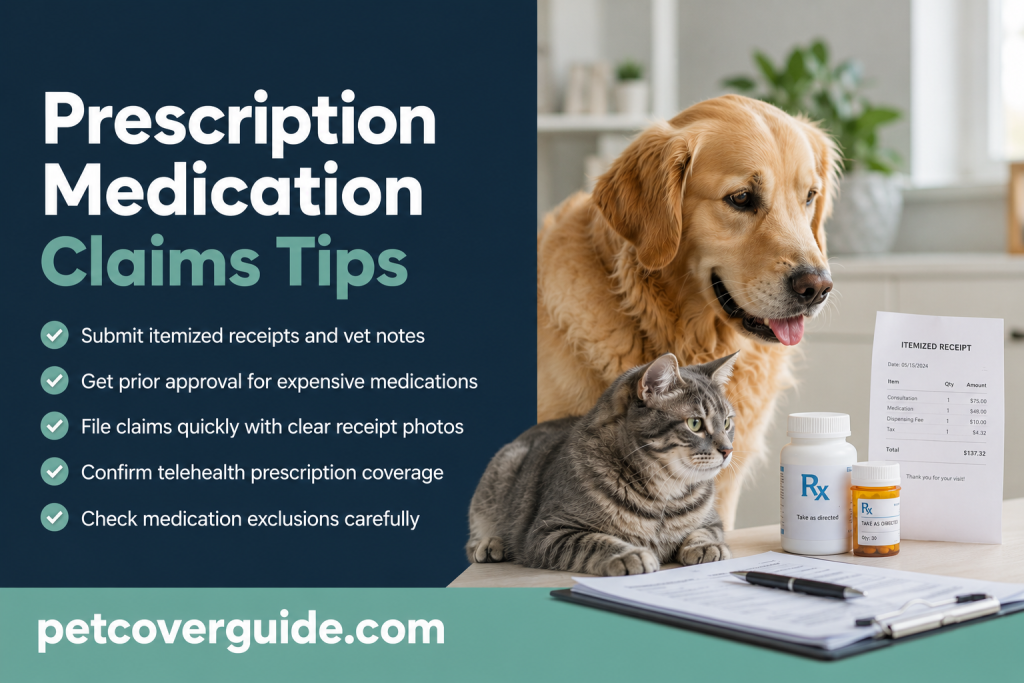
Reading the policy fine print carefully can help you understand medication exclusions and reduce the risk of rejected claims later.
Cost Analysis
Per incident deductibles raise your out-of-pocket costs dramatically for ongoing monthly prescriptions. A pet needing two medications for arthritis may meet a new deductible every few months under those plans.
Veterinary drug price inflation of 12-18% in 2026 makes pet insurance for chronic conditions more valuable than ever.
A comprehensive policy with unlimited payouts can deliver hundreds in annual savings for pets on long-term insulin therapy or cancer treatment medications.
Calculate your pet’s current yearly medication spend. Add the projected 2026 increase. Compare that total against premiums plus deductible and coinsurance.
Special Considerations
Oncology and specialty drug coverage varies widely, with providers like ASPCA Pet Health Insurance and Petplan often offering higher annual limits but still requiring prior authorization for costly treatments.
State rules such as in Texas mainly focus on disclosure, not forcing coverage of specific drugs. Most plans only cover FDA-approved medications, while supplements and alternative therapies remain limited.
Early enrollment is key, as waiting until a chronic condition develops usually triggers pre-existing exclusions.
To get the best value, compare at least three plans based on your pet’s age, breed, and location, and always check each insurer’s 2026 formulary for covered drugs.
Focus on policies with strong annual deductibles and optional wellness riders if you want predictable support for ongoing prescriptions like flea, heartworm, or chronic pain medications.